Quick Summary
AI is changing how businesses run. But let’s be honest, jumping in can feel confusing. That’s why we’ve rounded up 10 real-world use cases on how to implement AI in business that actually save you time, help you make smarter decisions, and give you an edge over the competition.
Table of Contents
Introduction
Artificial intelligence has been around for years, but only recently have we started seeing a noticeable rise in proven results that showcase its real value for businesses. In 2024, 71% of companies reported adopting generative AI for key business functions, up from 65% the previous year.
It demonstrates how the implementation of AI in businesses has matured, allowing companies to rely on real-world examples to understand how AI drives efficiency, revenue, and better decision-making.
Every business is unique, and what works for one organization may not work for another. Some use AI chatbots to manage customer queries, while others rely on predictive analytics to forecast trends or streamline operations.
The key is understanding which AI tools and strategies align with your specific goals rather than applying a one-size-fits-all approach.
With adoption reaching a stage where measurable outcomes are achievable, businesses can explore practical applications that deliver real impact. In this blog, you will explore how to implement AI in business through 10 successful use cases that show real-world results.
Implementing AI in Business: 10 Proven Use Cases
Adopting AI is easier than you think. Here are 10 use cases we’ve discussed on how to implement AI in business to achieve maximum results.
AI for Customer Relationship Management (CRM)
Keeping up with every lead, follow-up, and customer interaction can be exhausting. That’s where AI steps in for businesses to analyze customer behavior and activity, showing your team exactly which leads are ready to convert, which customers require attention, and the best way to reach them.
With the adoption of AI in CRM, your team can act more quickly, close deals faster, and deliver a customer experience that truly makes a difference.
How You Can Implement AI in CRM:
- Focus on Your Best Leads:
AI tools like Salesforce Einstein or HubSpot AI automatically rate leads based on engagement, activity, and likelihood to convert. This helps your sales team to focus on high-quality opportunities first.
- Personalize Communication: Integrating AI can help you automate emails and messages based on customer behavior, such as recent purchases, product views, or support requests. It can also choose the best time to reach each prospect, making communication more effective.
- Automate Data Updates: Platforms like Power Automate or Zoho CRM AI can collect information from emails, forms, or chats and automatically update CRM records. This ensures the accuracy of the lead data and reduces manual work.
- Identify At-Risk Customers: AI can detect low-engagement leads or early signs of churn and automatically trigger follow-ups or special offers. This helps retain customers and maximize revenue.
- Streamline Task Assignment: With the help of platforms like Zapier and Make, leads can be automatically assigned to the right person, to speed up responses and maintain a balanced workload.
Real-life Case Study
Grammarly used Salesforce Einstein AI to automatically score leads, prioritize high-quality prospects, and route them to the right sales representatives. With the implementation of AI, they also optimized email timing, making communications more relevant and reducing manual work.
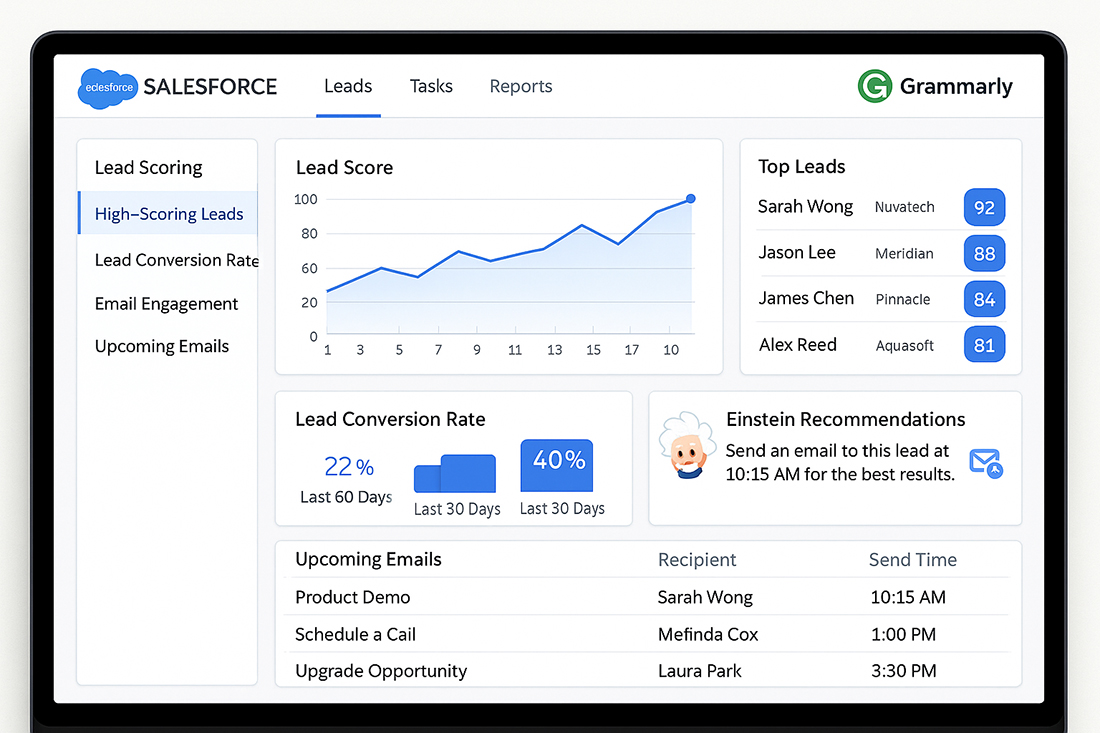
As a result, Grammarly was able to cut conversion time from 60–90 days to just 30 days, achieving an 80% increase in premium plan upgrades. Also, automated workflows and AI-driven insights improved efficiency and collaboration between marketing and sales teams. (Source)
2. Competitive Intelligence and Market Scanning
Keeping up with competitors and market trends takes a lot of time. AI consulting helps businesses implement solutions that highlight key insights, guide smarter decisions, and keep you a step ahead without overloading your team.
How You Can Implement AI in Competitive Intelligence and Market Scanning:
- Track Competitor Moves Automatically:
Platforms like Crayon, Kompyte, and Klue utilize AI to monitor competitor websites, social media posts, pricing, and product launches, delivering updates automatically with minimal manual effort.
- Spot New Market Trends Early: Spot trends early with AI platforms like Google Cloud AutoML and IBM Watson Discovery. These tools quickly analyze news, customer reviews, and industry reports to identify emerging opportunities, helping your business act before trends become mainstream.
- Predict the Next Big Shift: Predictive analytics platforms like DataRobot and H2O.ai forecast customer behavior, demand changes, and competitor moves, helping your business plan proactively.
- Benchmark Your Performance: AI analytics tools like Tableau AI or Sisense compare your performance metrics with industry standards. They show where you are doing well and where you need to improve.
- Get Quick, Clear Summaries: Assistants like ChatGPT Enterprise or Notion AI are AI-powered tools that provide summarization and research assistance. They can turn complex market data into short, easy-to-understand reports, saving hours of manual work.
Real-life Case Study
In October 2025, AlphaSense, a popular business intelligence platform, bought Carousel, an AI tool for Excel created by a Y Combinator-backed startup. Carousel now helps analysts automate spreadsheet tasks, pull and organize data from reports and filings, build and refine financial models, test different scenarios, and generate actionable insights quickly.
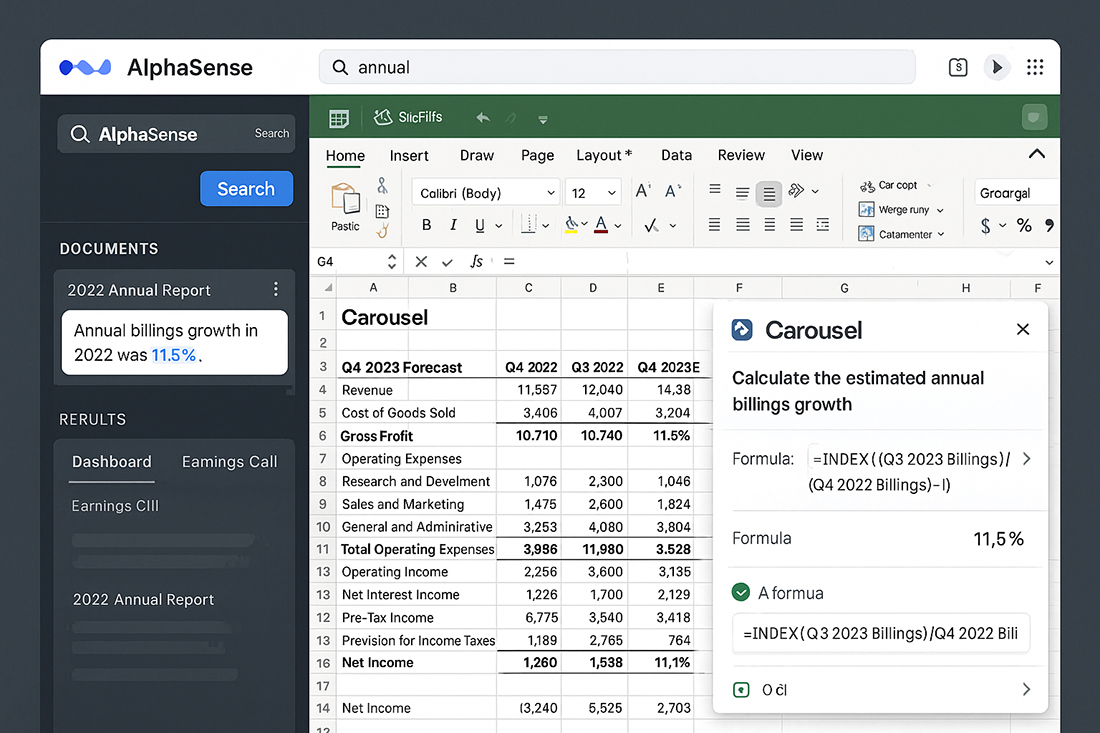
By integrating Carousel into its platform, AlphaSense enables users to spend less time on manual work and more time on strategic, data-driven decisions. (Source)
3. Document and Knowledge Compliance Checks
With the growing number of industries and regulatory requirements, ensuring compliance with all relevant regulations has become critical. Leveraging AI in the legal industry enables companies to review documents, policies, and reports efficiently, ensuring that nothing is overlooked and all standards are met.
How You Can Implement AI in Document and Knowledge Compliance Checks:
- Automatically Review Documents: With the help of Kira Systems, an AI tool, you can quickly scan contracts and policies for compliance and highlight the sections that need attention.
- Find Errors And Conflicts: Luminance is an AI-powered platform that helps you catch mismatched clauses, missing details, or incorrect numbers, so nothing slips through the cracks.
- Keep Knowledge Up To Date: Using SharePoint Syntex, an AI tool, you can organize internal documents and get suggestions for updates whenever compliance standards change.
- Generate Ready-to-Use Reports: With DocuSign Insight, an AI-powered contract analytics platform can summarize findings into clear, compliance-focused reports, saving hours of manual work.
- Suggest Fixes And Updates: With Leverton, an AI platform, you can flag errors, suggest corrections, or rewrite clauses, allowing your team to act quickly instead of just identifying issues.
Real-life Case Study
Deloitte uses Kira Systems, an innovative AI tool, to analyze thousands of contracts and complex documents. The system reads each document, finds important information, highlights errors or inconsistencies, and organizes the data for easier review.
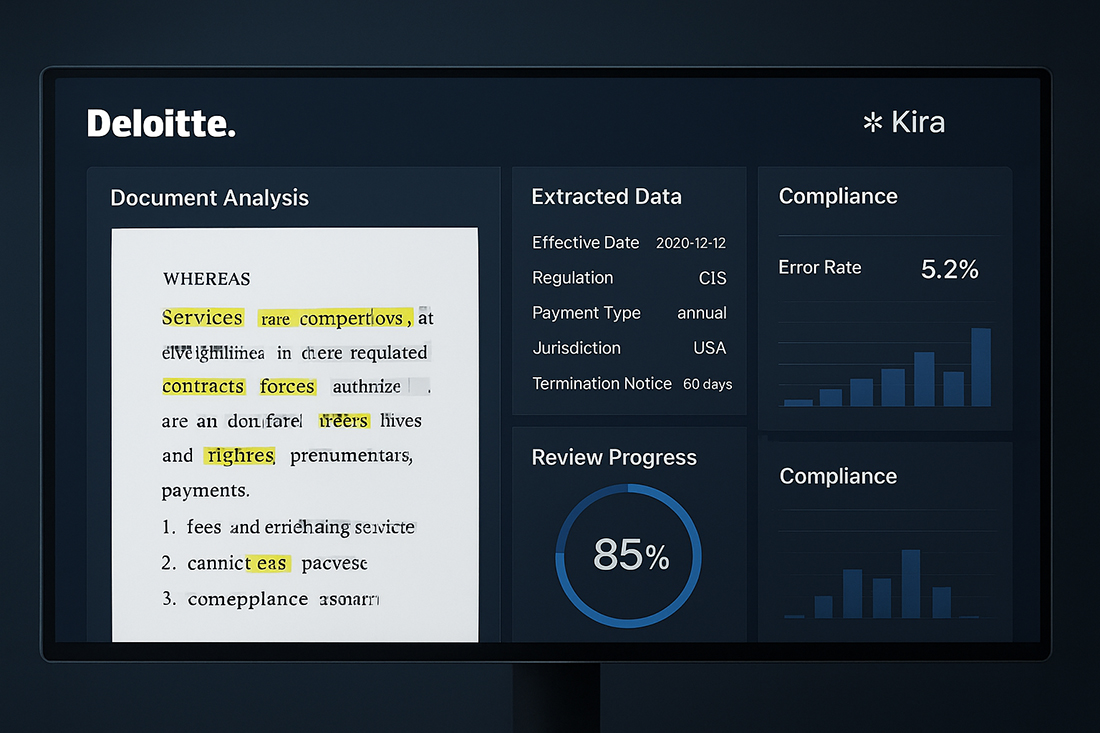
This helps reduce manual work by 20–90% per document, ensuring that all regulatory requirements are met. (Source)
4. Pricing and Contract Optimization
Setting the right price for your products or services and ensuring contracts are optimized can be tricky. With AI, businesses can analyze real-time demand shifts, competitor pricing, and customer purchase patterns to recommend optimal price points.
It can also scan contracts to flag risky clauses, track renewal terms, and ensure compliance. This helps improve profitability while minimizing financial and legal risks.
How You Can Implement AI in Pricing and Contract Optimization:
- Leverage AI for Dynamic Pricing:
Utilizing platforms like Zilliant Price IQ®, AI can automatically adjust prices based on demand, competitor rates, and customer behavior. This helps businesses boost revenue by identifying the optimal price point for each product, increasing win rates, and improving overall profitability.
- Assess Contract Risks with AI: You can use Seal Software, an AI tool, to scan contracts and highlight unfavorable clauses or risky renewal terms. It helps ensure compliance and reduces potential legal or financial issues. This ensures contracts are compliant and reduces financial risks.
- Detect Revenue Leakage: By using AI to analyze invoices and contracts, you can find undercharged items or missed billing opportunities. Platforms like Techtorch, LegittAI, and SirionLabs flag discrepancies to capture all possible revenue without relying on manual checks.
- Predict Outcomes and Guide Decisions: Platforms like Aviso use AI to forecast customer behavior, contract performance, and pricing impact. This enables your team to make informed decisions before negotiations or pricing changes, rather than reacting afterward.
Real-life Case Study
A major U.S.-based foodservice distributor worked with Zilliant, an AI-driven pricing and sales platform, to bring intelligence into their pricing and contract processes. Zilliant analyzed past sales, competitor pricing, and customer behavior to recommend the best prices and flag risky contract clauses.
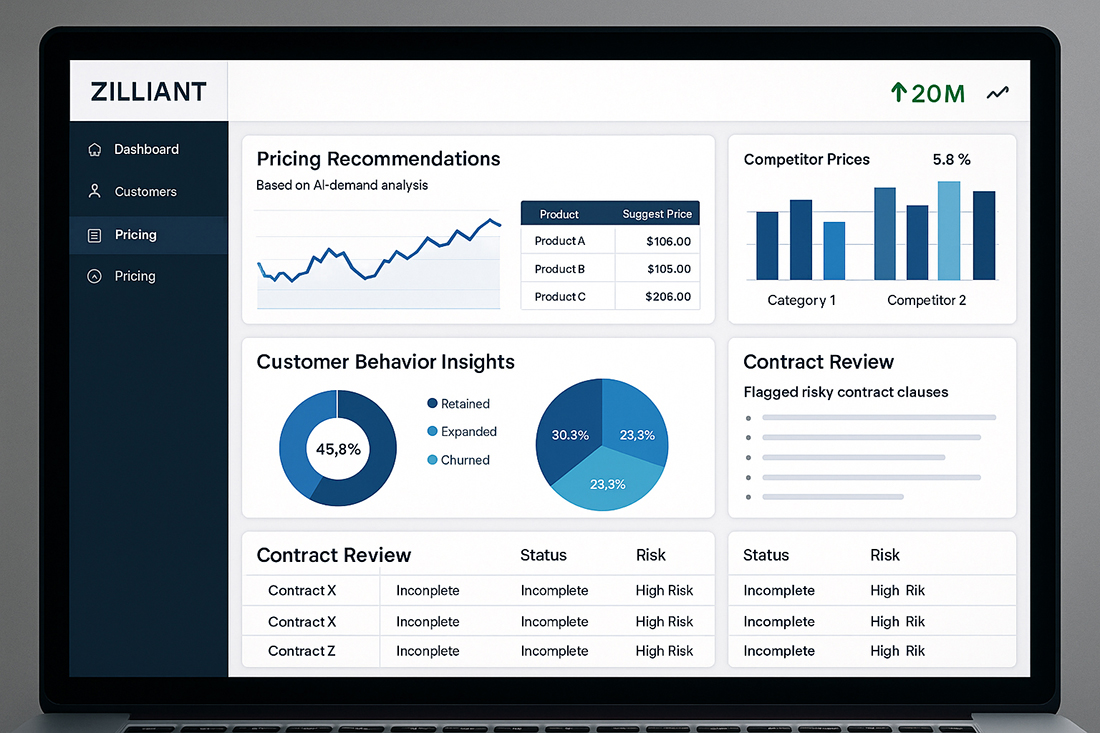
The sales team utilized these AI insights to negotiate more effectively and efficiently, resulting in $20 million in additional revenue. It also reduced manual work and sped up decision-making. Overall, the implementation of AI in business helped the company maintain consistent pricing and boost the efficiency of the sales team. (Source)
5. Predictive Quality Control for Products/Services
When product failures occur, it’s often difficult to determine exactly why or when they happen. Implementing AI can analyze all production data in real-time and identify patterns or unusual behaviors that might otherwise go unnoticed.
How You Can Implement AI in Predictive Quality Control:
- Monitor Production in Real Time:
An AI platform like Seebo can pull in sensor and machine data to identify potential issues immediately, allowing your team to resolve problems before they reach customers.
- Predict Defects Before They Happen: By training AI models on historical production data, you can forecast defects and receive recommendations to adjust processes, thereby reducing errors and downtime.
- Automate Visual Inspections: Computer vision tools like Landing AI or Cognex can perform AI-driven visual quality inspections, automatically checking products for scratches, dents, or misalignments. This speeds up inspections and ensures more accuracy than manual checks.
- Optimize Processes Proactively: AI analytics can analyze production trends and suggest adjustments to workflows or machine settings, thereby reducing variability and enhancing overall product quality.
Real-life Case Study
With the help of an AI development company, a manufacturing company implemented Cognex’s AI-powered In-Sight vision systems to automate visual inspections. The AI analyzed products in real-time to detect defects, such as scratches, dents, and misalignments, that humans might miss.
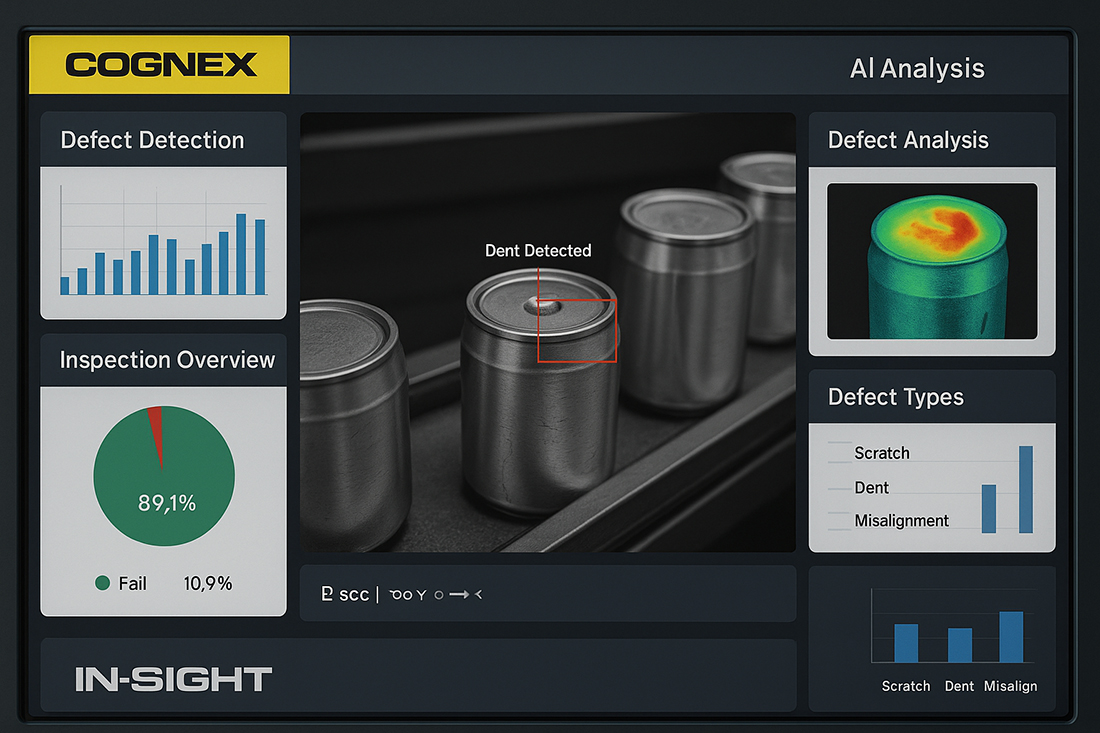
It adapted to variations in lighting and surface conditions, ensuring accurate inspections throughout the production line. This implementation improved defect detection, reduced waste, and let operators focus on process improvements. (Source)
6. AI-Enhanced Customer Support Workflow
Customer support often gets overwhelming when the same questions keep showing up, making it hard to respond quickly and keep customers happy. That’s where AI for customer service makes a real impact.
It can handle repetitive tasks like answering FAQs, routing tickets, or managing chat responses, helping your team save time and stay focused. And this has been one of the most common ways that businesses use AI in their business.
How You Can Implement AI in Customer Support:
- Automate Routine Queries:
Utilize AI chatbots like Zendesk AI or Intercom AI, or establish n8n workflow templates to handle common customer questions automatically.
- Analyze Sentiment and Prioritize Tickets: Platforms like Kustomer AI can detect urgency or frustration in messages and automatically route tickets to the right agent.
- Provide Predictive Agent Assistance: Tools like Yellow.ai or Ada suggest responses, knowledge articles, or next steps in real-time, reducing errors and speeding resolution.
- Unify Omnichannel Data: Integrate AI across email, chat, social, and voice channels to provide agents with a comprehensive view of customer history and interactions.
Real-life Case Study
Motel Rocks a UK-based fashion retailer, faced challenges in managing a high volume of customer inquiries. To address this, they implemented Zendesk’s AI-powered solutions, including chatbots and sentiment analysis tools.
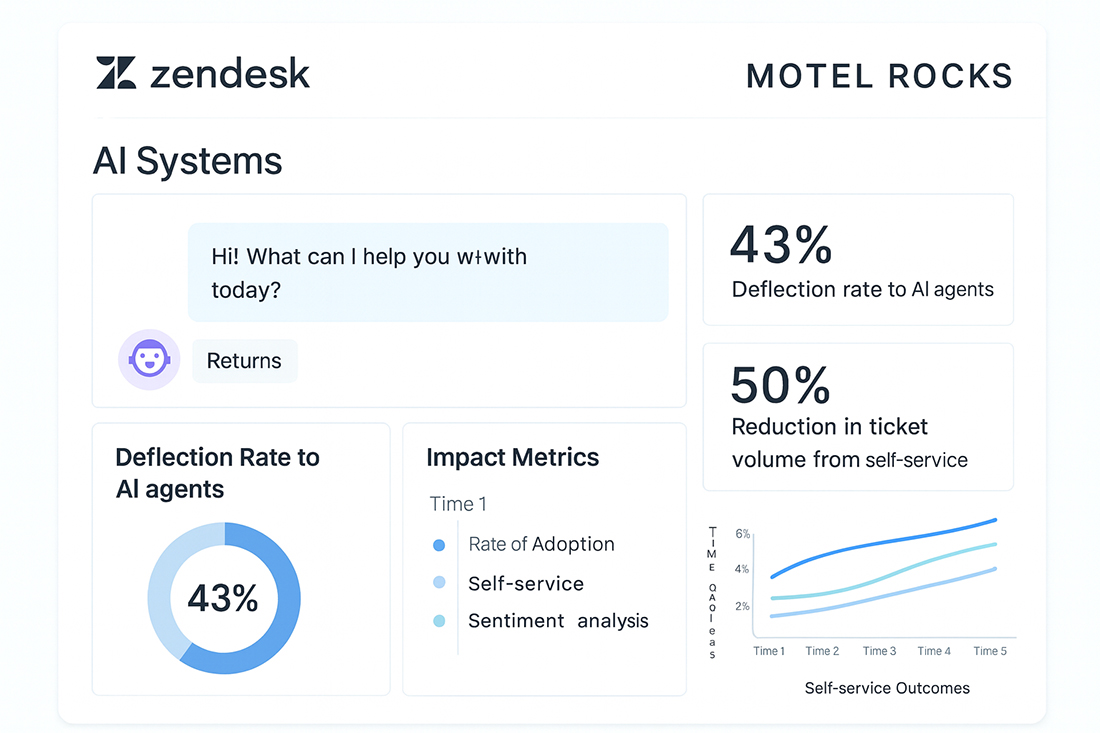
The AI systems automated responses to common questions, assessed customer emotions, and prioritized urgent issues. This integration led to a 43% deflection rate of tickets to AI agents, a 50% reduction in ticket volume due to self-service, and a 9.44% increase in customer satisfaction. (Source)
7. Accounting Workflow Automation & Forecasting
Think about all the repetitive accounting tasks your team handles daily, like entering transactions, reconciling accounts, and forecasting cash flow. These tasks can be time-consuming and prone to errors.
AI-driven business process automation can efficiently handle these workflows, reduce mistakes, and free your team to focus on strategic decisions that drive growth.
How You Can Implement AI in Accounting & Forecasting
- Automate Routine Tasks:
Utilize AI tools like FloQast or Basis to automate invoice handling, expense categorization, and account reconciliation. This reduces mistakes and frees your team from hours of repetitive work.
- Make Smarter Forecasts: A Platform like DataRobot can analyze past financial data to predict cash flow trends, revenue changes, and potential risks. This helps you plan ahead and make confident decisions.
- Streamline Approvals and Alerts: Connect AI with your accounting systems to flag unusual transactions and route approvals instantly. You catch issues early without slowing down operations.
- Gain Actionable Insights: AI scans your financial data to identify patterns and anomalies, highlighting opportunities to reduce costs, optimize spending, or invest more effectively.
Real-life Case Study
Omega Healthcare, a leader in revenue cycle management, partnered with UiPath to automate medical billing, insurance claims, and documentation. Using UiPath’s AI-powered Document Understanding, they extracted key data from documents quickly and accurately.
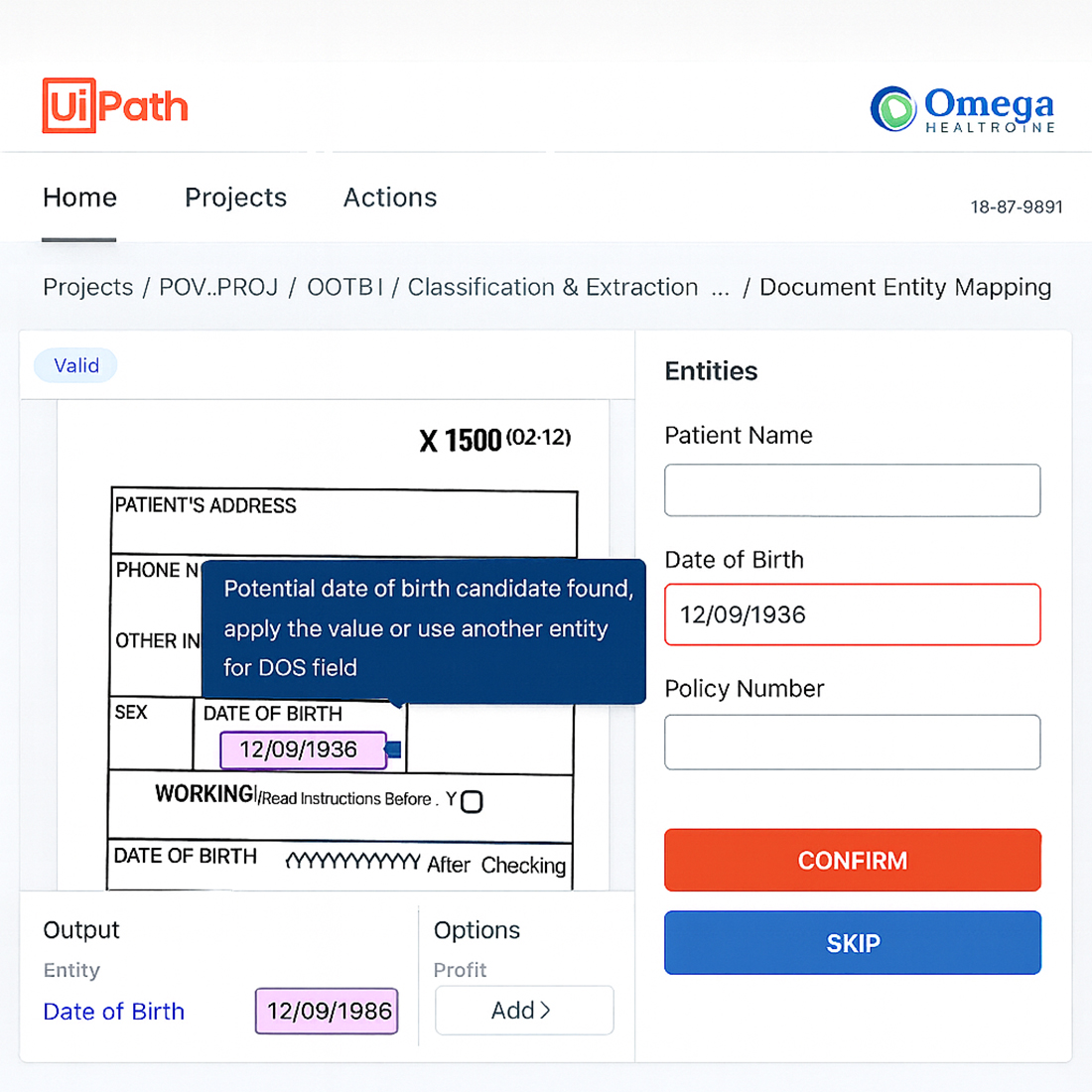
This automation saved over 15,000 employee hours per month and reduced turnaround time by 50%. It also allowed staff to focus on decision-making instead of repetitive tasks. The AI integration improved accuracy and efficiency, and delivered a 30% ROI for clients. (Source)
With the support of skilled AI and uipath developers at Bacancy, organizations can replicate such automation projects, streamline complex workflows and achieve faster, more accurate results.
8. Supply Chain and Inventory Management
Maintaining a balanced inventory and ensuring products reach customers on time can be challenging. Implementing AI in supply chain can help you analyze demand, monitor stock levels, and predict disruptions so your operations run smoothly and efficiently.
How You Can Implement AI in Supply Chain and Inventory Management:
- Forecast Demand Accurately:
Platforms like Llamasoft or Blue Yonder use AI to predict demand trends based on sales history, market trends, and seasonality, to help reduce overstocking, prevent stockouts, and improve supply chain efficiency.
- Optimize Stock Levels: Tools like E2open or NetSuite AI help determine the optimal inventory levels for each warehouse, reducing overstock and stockouts.
- Automate Reordering: AI can trigger automated purchase orders when inventory levels reach specific thresholds, ensuring products are always available.
- Predict Supply Chain Disruptions: Platforms like SAP Integrated Business Planning or IBM Sterling Supply Chain Insights analyze supplier performance, weather, and logistics data to flag potential risks.
Real-life Case Study
Amazon has successfully implemented AI in its supply chain to predict product demand and manage inventory more efficiently. Using machine learning algorithms like XGBoost and LSTM, the company forecasts demand by analyzing customer behavior, seasonal trends, and regional data.
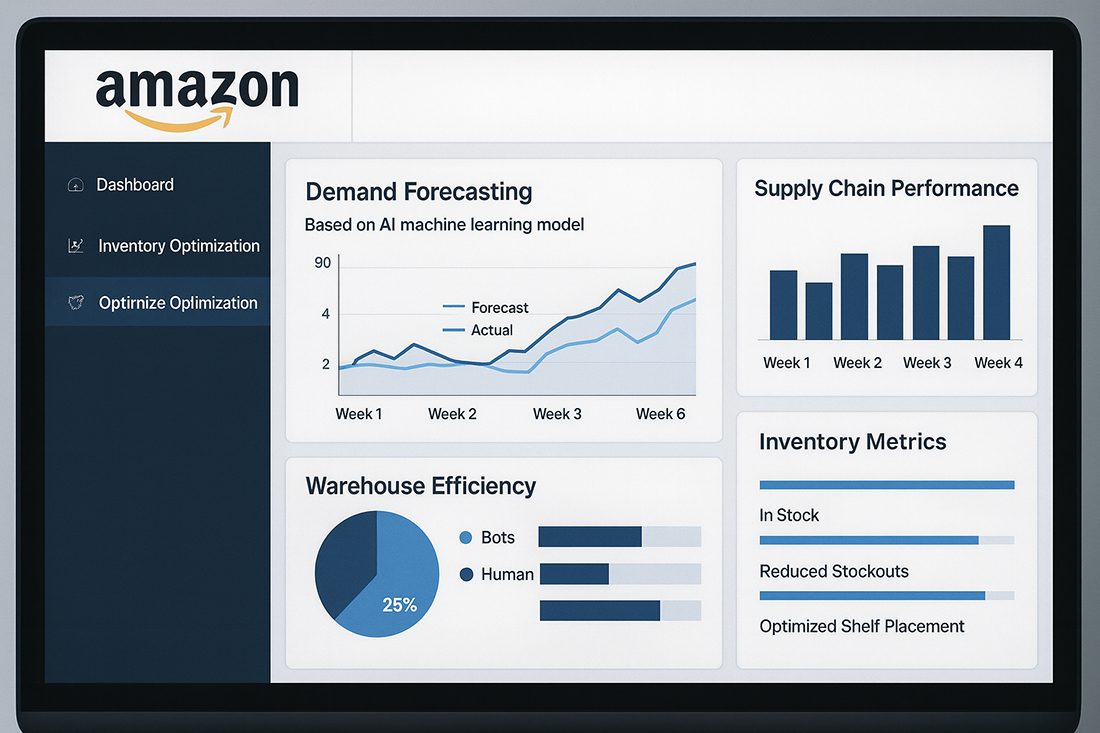
These insights also power warehouse robots (such as Kiva robots) and smart routing systems, optimizing inventory placement, speeding up order fulfillment, and reducing stockouts by around 30%. By combining predictive analytics with AI-driven logistics, Amazon has been able to cut costs, improve delivery times, and maintain consistent shelf stock. (Source)
9. AI in Cybersecurity and Threat Detection
With the growing number of cyberattacks, relying solely on manual monitoring is no longer enough. AI can continuously analyze network traffic, user behavior, and system patterns to detect threats before they cause damage. It’s like having a security guard that never sleeps and gets smarter every day.
By spotting unusual activity in real time, AI helps prevent breaches, reduce response times, and strengthen overall security.
How You Can Implement AI in Cybersecurity and Threat Detection:
- Detect Anomalies in Real-Time:
Platforms like Darktrace and Microsoft Sentinel AI can automatically spot unusual activity on your network, alerting your team instantly.
- Automate Threat Response: AI tools, such as IBM QRadar Advisor with Watson, can automatically isolate affected devices or block malicious connections.
- Predict Future Attacks: Utilize AI-powered analytics to forecast potential vulnerabilities based on global threat data, enabling you to prepare in advance.
- Strengthen Endpoint Security: Tools like CylancePROTECT utilize AI to identify malware and ransomware even before they are publicly known, keeping all devices secure.
Real-life Case Study
AT&T, a major U.S. telecommunications company, faced rising challenges with fraud, including account hijacking and identity theft, which threatened both customer trust and operational efficiency. To address these issues, AT&T implemented Generative AI through the Databricks Data Intelligence Platform.
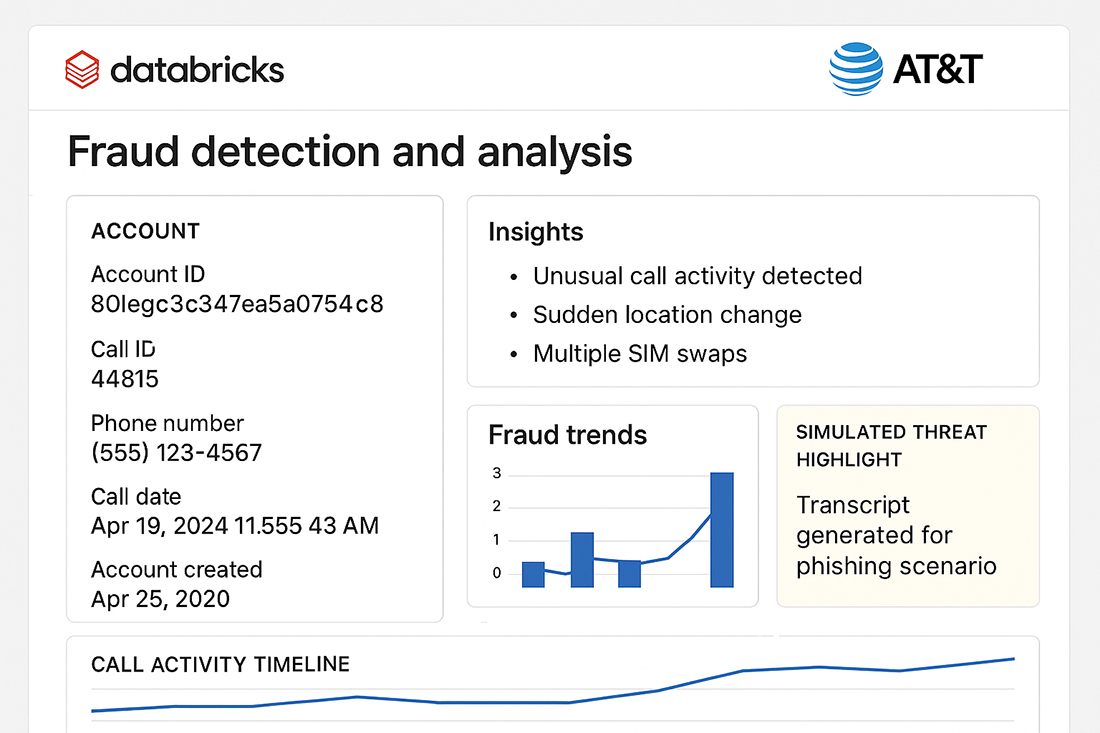
By analyzing customer calls and interactions, the AI detects unusual activity, identifies fraud patterns, and even simulates potential threats to prevent future attacks. This solution helped AT&T reduce fraud by 80%, enhance customer protection, and streamline its fraud detection processes, demonstrating how AI can transform cybersecurity in large organizations.(Source)
10. AI for Strategic Decision-Making & Executive Insights
Making critical business decisions is tough when market data is complex and trends change rapidly. AI can analyze both historical and real-time data, simulate various scenarios, and provide predictive insights that enable executives to make smarter, data-driven decisions.
How You Can Implement AI in Strategic Decision-Making:
- Forecast Market Trends:
Platforms like DataRobot and Palantir Foundry analyze large datasets to identify emerging trends, enabling executives to make informed decisions and stay ahead of the competition.
- Identify Key Opportunities: AI analyzes patterns in sales, market trends, and customer behavior to highlight areas with the highest growth potential. This helps executives focus on the most promising investments and strategies.
- Optimize Resource Allocation: AI solutions can recommend budget adjustments, staffing plans, and operational changes based on predictive performance.
- Support Executive Decisions: Dashboards powered by Tableau AI or Power BI with AI integration transform complex data into clear, actionable recommendations for leadership, enabling fast, data-driven decision-making.
Real-life Case Study
JPMorgan implemented Cash Flow Intelligence, an AI solution that automates cash flow analysis for corporate clients. The platform predicts cash needs, flags potential shortfalls under different scenarios, and helps executives allocate resources more efficiently.
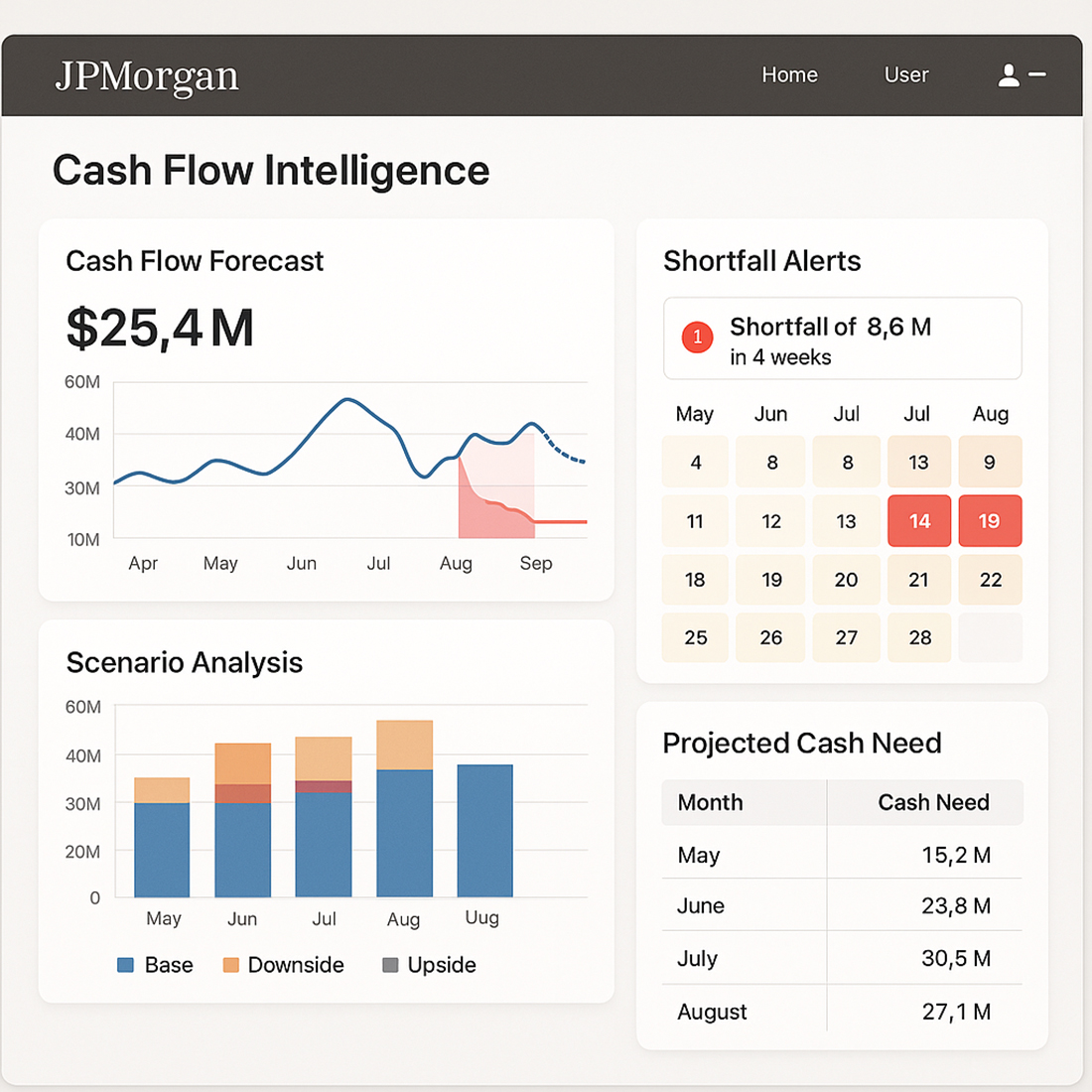
It reduced manual work by nearly 90%, enabling faster, more intelligent decision-making. Over 2,500 clients now utilize it, demonstrating how AI can drive productivity, optimize resource utilization, and enhance overall business performance. (Source)
How Can Bacancy Help You Implement AI in Your Business?
AI has the power to transform businesses of all sizes, whether through AI for enterprises to optimize complex operations or AI for startups to automate tasks and enhance decision-making, helping companies work smarter and stay competitive.
If you are wondering how to implement AI in business, hire AI developers from us who all have hands-on AI experience with practical expertise to help businesses implement AI in ways that deliver measurable results. From strategy to execution, our approach ensures AI drives real impact across your organization.
- Strategic AI Consulting:
We analyze your operations and identify high-impact opportunities, creating a roadmap that aligns AI with your business goals.
- Tailored Solutions: From predictive analytics to intelligent automation, we build AI tools designed to grow with your business.
- Seamless Integration: We connect AI with your existing systems, automate repetitive tasks, and provide real-time insights for faster decision-making.
- Actionable Insights: AI turns raw data into clear recommendations, helping you forecast trends, optimize resources, and make informed choices.
- Continuous Improvement: AI isn’t one-and-done; we monitor, refine, and scale solutions to ensure lasting impact.
To illustrate how this works in practice, here are a couple of real-world examples where Bacancy brought AI to life:
Case Study 1: Automating Multi-Department Workflows for AutomateIQ.ai
Challenge: AutomateIQ.ai struggled with repetitive manual processes across Finance, Customer Service, and Marketing. Invoice processing, email management, CRM logging, and campaign execution consumed too much time and slowed down operations.
Solution: Bacancy’s n8n developers designed AI-powered agents using n8n to automate these workflows. The agents handled invoice extraction, email categorization, CRM logging, social media management, and marketing campaigns while providing centralized reporting.
Impact: The client achieved faster, more efficient operations, reduced manual work, and gained a clear view of all processes in one dashboard,boosting productivity across multiple departments.
Case Study 2: Replacing Human Account Management for a US-Based Printing Company
Challenge: The client wanted to automate the full customer lifecycle,intake, estimating, sales, follow-ups, and inbox management,while maintaining personalized communication. Human Account Managers were overwhelmed by multi-channel communication and high volumes of customer inquiries.
Solution: Bacancy implemented a GPT-based multi-agent system integrated with n8n, HubSpot, Twilio, Aircall, and other APIs. Agents handled voice, SMS, and email communication, generated estimates, managed follow-ups, and maintained personalized interactions.
Impact: The system replaced manual processes, improved response speed, and delivered consistent, human-like interactions, freeing the team to focus on higher-value activities and boosting customer satisfaction.
These case studies show how Bacancy makes AI a part of your everyday operations, helping your team work smarter and focus on what truly matters. Leverage our AI/ML development services to get customized solutions tailored to your business needs. Partner with us to boost efficiency, improve decision-making, and deliver measurable results every day.
Frequently Asked Questions (FAQs)
The first steps for AI implementation in business involve identifying your goals, assessing your processes, and choosing areas where AI can deliver real value. Following structured AI implementation steps ensures you start efficiently and maximize results.
Selecting the right AI tools is part of AI implementation best practices. Look for solutions that align with your goals, integrate well with your existing systems, and can scale as your business grows. Expert guidance can make this process much easier.
Yes, small businesses can benefit from AI implementation in business. Automating customer support, streamlining operations, or using AI for predictive insights can save time and increase revenue without requiring a large team.
Results can vary depending on the complexity of the project. Simple automations may show results within weeks, while predictive analytics and custom solutions may take a few months. Following AI implementation best practices helps achieve measurable outcomes faster.
While large datasets improve accuracy, AI implementation in business can start with smaller, clean, structured datasets. Preparing your data effectively is one of the key AI implementation steps for success.