Quick Summary
Choosing the right subscription model can make or break your SaaS growth. From pricing psychology to tier structure and upgrade paths, every decision shapes how users perceive value and commit long-term. This guide breaks down the tools, principles, and real-world examples you need to define your SaaS subscription model like a pro, striking a balance between profitability and customer trust.
Table of Contents
Introduction
Defining a SaaS subscription model is more than setting a price. It determines how customers experience value and how your business earns predictable revenue. The right SaaS subscription pricing model attracts ideal users, supports scalability, and keeps growth steady.
Many SaaS founders face questions such as: Should we choose freemium or tiered pricing? Flat-rate or usage-based?
This blog explains proven methods that successful SaaS companies follow to structure pricing, plan tiers, and improve conversions. By the end, you will know how to determine a SaaS subscription model that feels fair to customers and supports long-term business growth.
The Psychology of SaaS Pricing: People Don’t Buy Features, They Buy Certainty
Several SaaS founders think that setting the correct numbers or adding more features will automatically attract customers. The reality is different. Most users rarely care about every feature your product offers. What matters to them is certainty; it is knowing your product will solve their problem and deliver real value.
Another common mistake and trap is giving too many pricing options to customers. When a user sees too many plans, they often feel overwhelmed and struggle to make a choice. They often leave without picking any option.
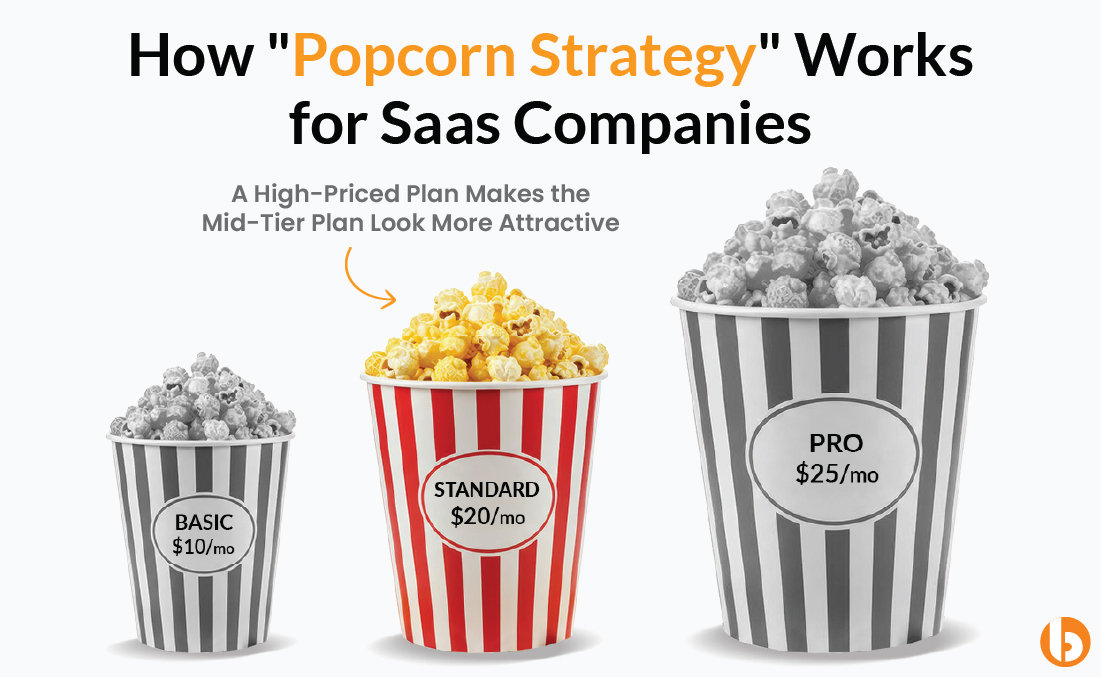
Just like how a popcorn strategy works. In this approach, a high-priced plan is introduced to make mid-tier plans appear more affordable and reasonable. This psychological trigger helps users feel they are making a smart, value-driven choice without overspending.
For example, Superhuman sets a premium price for its email platform; only a few users choose it, but it makes the lower plans seem like a better deal. Similarly, Canva and Figma use free plans to build familiarity, making their paid tiers feel like natural upgrades once users recognize the value.
What truly makes this strategy work is trust and perceived value. Users don’t just buy a product; they buy confidence in what it can deliver. Transparent pricing reinforces that trust. While monthly plans make it easy to start, annual plans often strengthen loyalty and reduce churn by encouraging long-term commitment.
What are the Common Pricing Mistakes SaaS Founders Still Make?
- Many SaaS founders underprice their product out of fear, which often devalues the offering and slows growth.
- Copying competitor pricing without understanding your own audience or value proposition leads to poor positioning.
- When features are not clearly mapped to customer value, users struggle to understand what they are paying for.
- Ignoring upgrade paths prevents customers from scaling with your product and reduces long-term revenue potential.
- Failing to revisit pricing every 6-12 months means missing chances to adapt to market changes and capture more value.
Avoid costly pricing mistakes in your SaaS.
Hire SaaS developer from Bacancy to build scalable subscription models that drive adoption and growth.
How to Define Your SaaS Subscription Model?
Before you choose a SaaS subscription pricing model, define what your subscription should deliver to both your business and your customers.
1. Start with your audience
Know well who you are targeting. For instance, startups look for affordability, growing teams look for flexibility, and enterprises value control.
2. Identify your value metric
Decide what users are paying for. It could be seats, storage, active users, or transactions. The right metric should increase as customers gain more value from your product.
3. Review your competitors
Every study indicates the importance of researching competitors and how others price their products. The goal is not to copy, but to identify where market gaps and customer expectations exist.
4. Align it with your goals
If you want steady revenue, tiered pricing works well. If you plan to scale faster, usage-based pricing fits better. Let your pricing support your growth path.
5. Test and refine
No pricing model is perfect on day one. Gather feedback, observe user response, and make changes until your price aligns with the value you deliver.
7 Popular SaaS Subscription Pricing Models (and When to Use Them)
Before choosing the right SaaS pricing model, explore the different SaaS subscription models. It will help you determine how customers perceive your value, how predictable your revenue becomes, and how effectively you can grow across customer segments.
Here’s a detailed look at the 7 most common SaaS subscription pricing models, how they work, and when to use them.
1. Flat-Rate Pricing
Flat-rate pricing means you charge one fixed price for your entire product, no tiers, no add-ons, no complexity. Every customer gets full access to your core offering, regardless of company size or usage level. It’s simple to communicate, simple to bill, and it builds instant clarity. Customers know exactly what they’ll pay and what they’ll get in return.
This model works best for SaaS businesses that solve a single, well-defined problem and deliver the same level of value to all users. It eliminates decision fatigue because there’s only one choice: “take it or leave it.” However, it limits flexibility for growing teams that might be willing to pay more for advanced functionality or higher usage limits.
Best for:
SaaS products with a narrow scope or a straightforward use case.
Use when:
- Your value remains consistent regardless of customer size or usage.
- Your goal is to achieve quick sign-ups with minimal sales negotiation.
- You target startups or SMBs that prefer simplicity.
Avoid if:
- Your customers vary significantly in size or usage volume.
- You plan to upsell features or expand accounts later.
Key metric:
Customer churn and Monthly Recurring Revenue (MRR) stability.
Example:
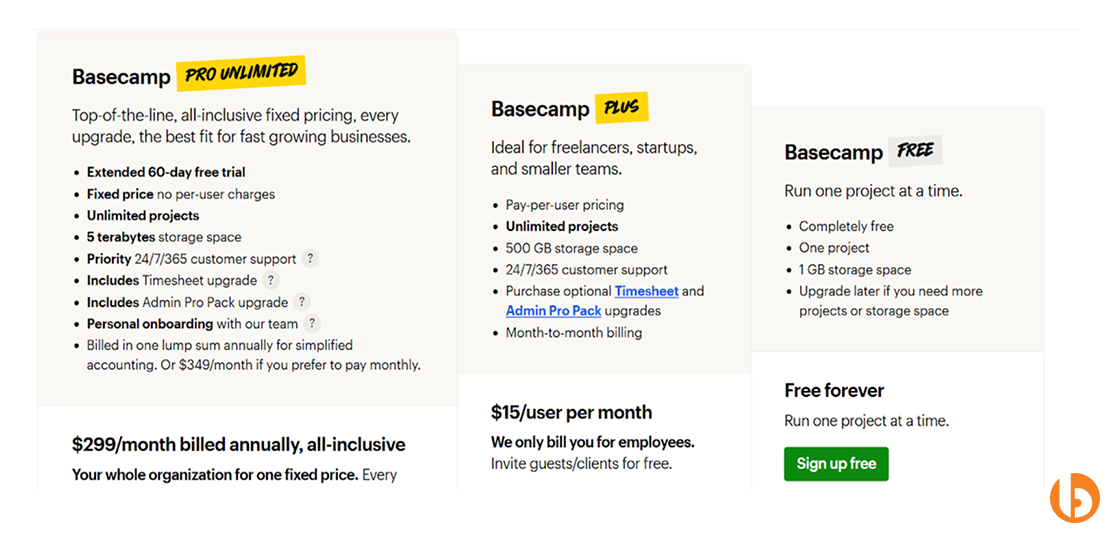
Basecamp uses a single $15/month plan that includes unlimited projects and users. This approach signals confidence and transparency while reducing purchase friction.
2. Tiered Pricing
Tiered pricing divides your offering into multiple plans, each designed for a different customer segment or level of need. For example, a “Starter” plan may focus on small teams, while a “Pro” or “Enterprise” plan caters to organizations with advanced requirements.
Each tier typically includes progressively more features, usage limits, or support. The goal is to make users see value differences clearly and encourage them to upgrade naturally as their needs grow. It also gives you pricing flexibility: entry-level users can get started easily, while advanced customers contribute more revenue.
Best for:
Products that serve distinct audience segments (startups, SMBs, enterprises).
Use when:
- You can clearly define different customer personas.
- Your product’s value increases with usage or team size.
- You want a built-in upgrade path that grows with users.
Avoid if:
- Your product offers a single feature set.
- You lack data to understand customer segmentation.
Key metric:
Upgrade conversion rate and ARPU growth.
Example:
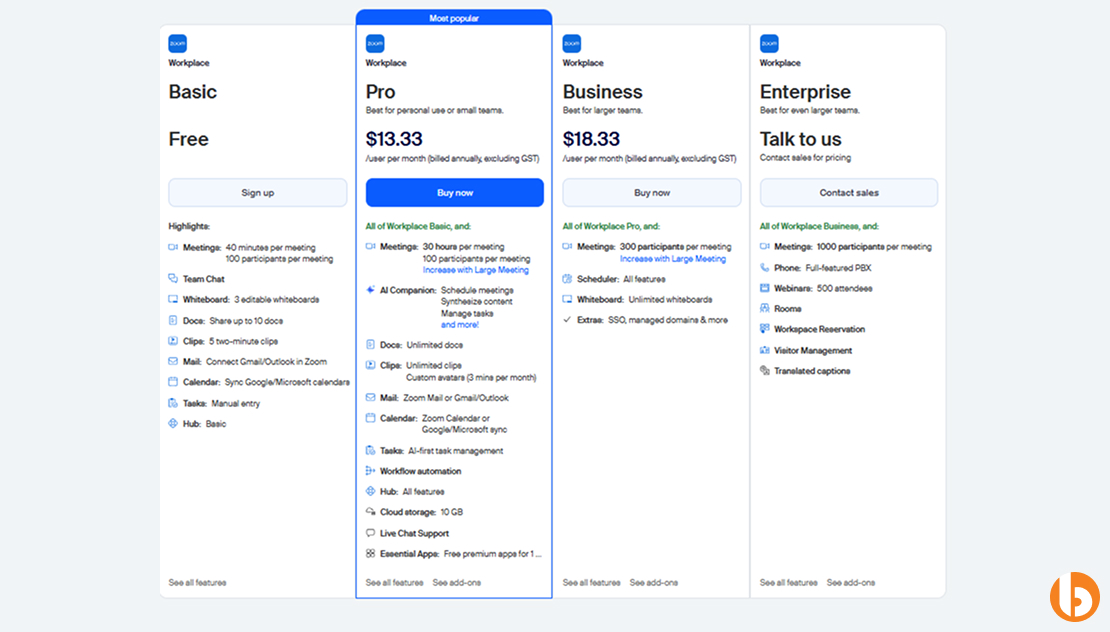
Zoom is an excellent example as it offers multiple plans that map to specific growth stages, making it easy for users to start small and scale up without switching platforms.
3. Usage-Based Pricing
In this model, customers pay for exactly what they use, whether it’s API calls, bandwidth, messages sent, or gigabytes stored. This model directly ties cost to customer value, making it fair and scalable.
The benefit is transparency: users pay only when they gain value. It is ideal for developer tools, cloud infrastructure, or data platforms where usage varies month to month. However, it requires strong tracking and billing systems, and customers sometimes worry about unpredictable costs.
SaaS providers often pair a low base fee with usage-based add-ons to strike a balance between predictability and flexibility. This ensures that small users can start at a low cost, while heavy users naturally contribute more revenue.
Best for:
Products where value correlates directly with usage volume (e.g., AWS, Twilio).
Use when:
- You can measure product usage accurately.
- You want pricing to scale automatically with customer success.
- You want a low barrier to entry for new users.
Avoid if:
- Your customers expect fixed monthly costs.
- Your usage metrics are hard to quantify or explain.
Key metric:
Revenue expansion and retention among growing accounts.
Example:
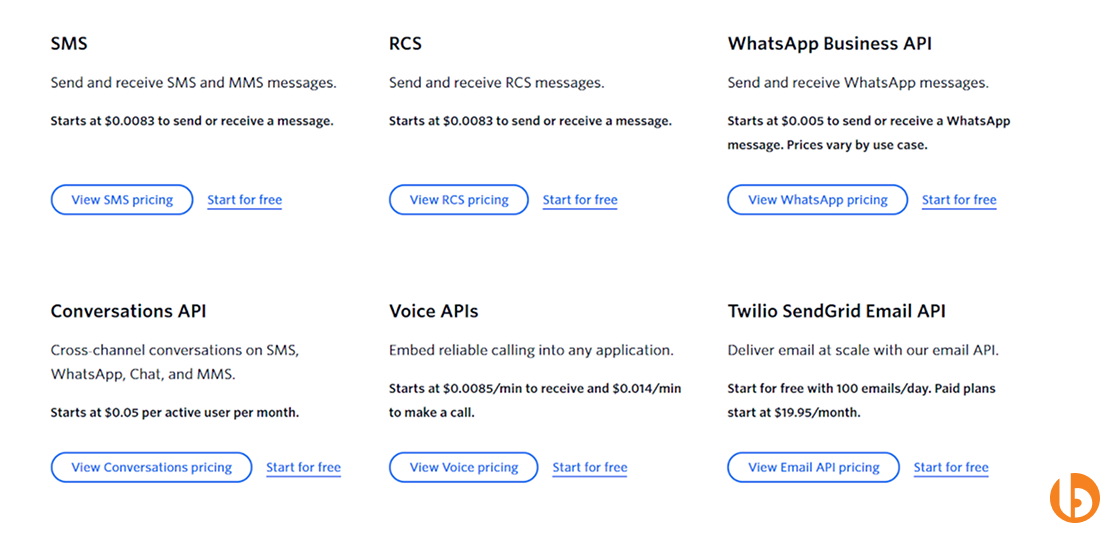
Twilio charges per SMS, call, or API request, allowing startups and enterprises alike to pay in proportion to their usage, perfectly aligning value with cost.
4. Per-User (Seat-Based) Pricing
Per-user pricing charges customers based on the number of users they add to their account. It’s the most common model for B2B SaaS products, especially those focused on collaboration and communication.
This model scales naturally with team growth: as organizations add more users, revenue increases without complex upsells. It’s also predictable and easy to understand; every new team member has a clear cost associated with them.
The challenge is that some companies may share accounts to avoid costs, and for products where usage is collective, such as dashboards or automation systems, charging per user may not accurately reflect the actual value.
Best for:
Team-based SaaS tools like Slack, Notion, or Asana.
Use when:
- Collaboration or team access defines your product’s value.
- You can track user engagement clearly.
- Pricing transparency is a key trust factor.
Avoid if:
- Users commonly share accounts.
- Your product provides shared value rather than individual utility.
Key metric:
Seat expansion rate and active user retention.
Example:
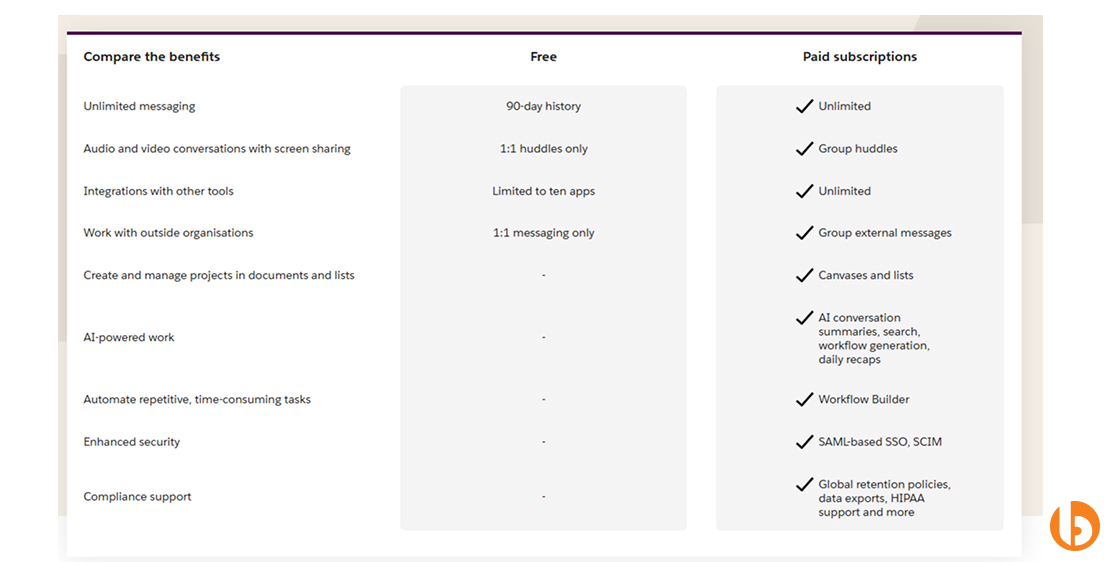
Slack charges only for active users in a workspace, ensuring fairness while tying growth directly to product adoption.
5. Freemium + Conversion Model
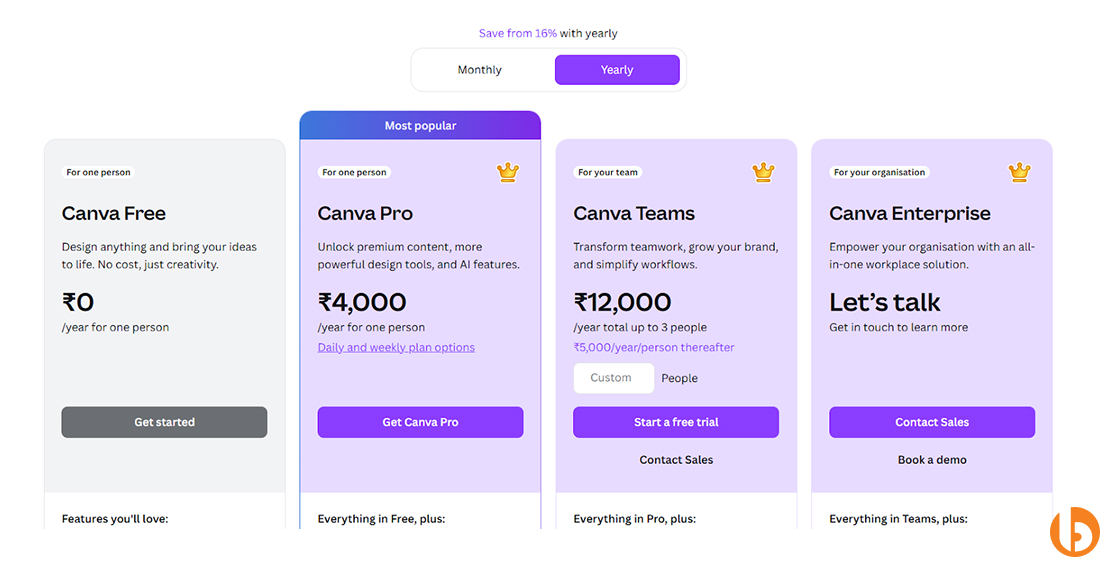
Freemium pricing allows users to start with a free version that offers limited features and upgrade once they experience the product’s value. It’s a powerful SaaS pricing subscription model strategy for rapid adoption and word-of-mouth growth.
The free plan removes entry friction and helps build trust early. Once users hit usage limits or crave premium features, they upgrade willingly. The challenge is conversion; if the value gap between free and paid tiers isn’t obvious, users will stay on the free tier indefinitely.
Best for:
Products that deliver immediate value and can handle large user volumes (e.g., Canva, Figma, Dropbox).
Use when:
- Your product is intuitive and delivers value quickly.
- You have strong onboarding and upselling workflows.
- You want to prioritize user acquisition and retention.
Avoid if:
- Your product is intuitive and delivers value quickly.
- You have strong onboarding and upselling workflows.
Key metric:
Free-to-paid conversion rate and LTV-to-CAC ratio.
Example:
Canva lets users design and collaborate for free. Once they outgrow basic features, premium plans feel like a natural upgrade rather than a hard sell.
6. Per-Active-User Pricing
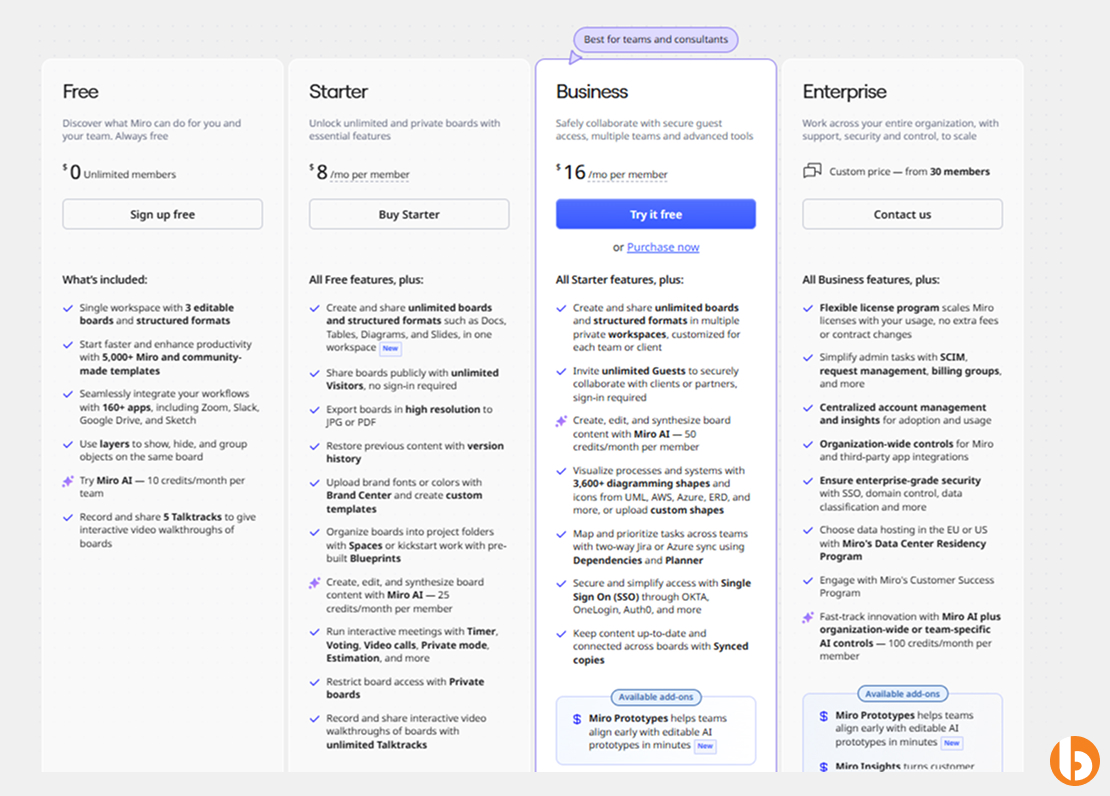
This is a flexible version of per-user pricing; customers pay only for active users who actually use the product during a billing period. It’s a fair and trust-building approach for tools where team activity varies month to month.
Instead of forcing teams to pay for all registered users, this model aligns cost with actual engagement. It encourages teams to invite more members freely since they won’t be charged for inactive ones.
Best for:
SaaS tools where engagement fluctuates (e.g., Miro, Notion Business).
- You want to encourage collaboration without cost anxiety.
- Customer usage is seasonal or project-based.
- You can track engagement accurately.
Avoid if:
- You can’t distinguish between active and inactive users.
- Your revenue relies on consistent seat counts.
Key metric:
Engaged user ratio and account retention.
Example:
Miro charges only for active users, removing the friction of adding occasional collaborators while building trust and transparency.
7. Hybrid Pricing Model
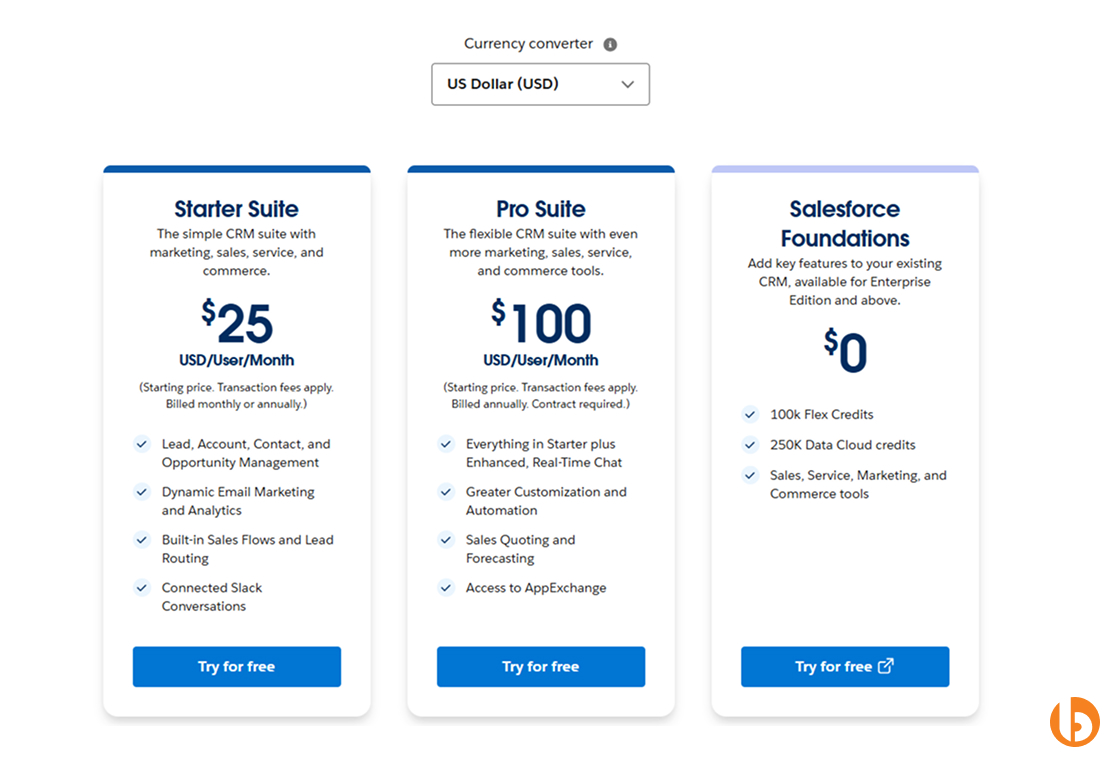
Hybrid pricing combines two or more pricing strategies, such as a fixed base fee plus usage-based billing or tiered plans with add-ons. It is designed to balance predictable revenue with scalable upside.
Hybrid pricing fits mature SaaS businesses serving varied customer types. It allows flexibility for customization, but it also adds complexity in communication and billing. The key is transparency, where customers should easily understand how pricing works, even when multiple factors are added to it.
Best for:
Established SaaS platforms with a wide product suite (e.g., Salesforce, HubSpot Enterprise).
Use when:
- You serve multiple audience segments with different needs.
- You want predictable revenue but flexibility for expansion.
- You have the infrastructure to manage complex billing.
Avoid if:
- Your product is still finding product-market fit.
- Your customers get confused by multi-layered pricing.
Key metric:
Revenue mix by pricing stream and Net Revenue Retention (NRR).
Example:
Salesforce combines per-user pricing with usage-based add-ons, such as CRM. This lets it serve startups and enterprises alike while maintaining flexibility and scalability.
Choosing the Right Model: Quick Decision Guide for SaaS Subscription Model
| Business Types | Ideal Models | Why it Works |
|---|
| Early-stage startups | Freemium / Flat-rate | Builds a user base and reduces entry barriers |
| Mid-market SaaS | Tiered / Per-user | Offers flexibility and growth potential |
| Enterprise SaaS | Tiered / Per-feature / Value-based | Aligns pricing with perceived ROI |
| API-driven or usage-heavy tools | Usage-based | Scales directly with customer activity |
Quick Checklist: Is Your SaaS Subscription Pricing Model Plan Ready?
Before you launch or revise your SaaS pricing, it’s worth pausing for a quick self-check. Use this list to see if your subscription plan is clear, competitive, and ready to scale.
- Ensure that each pricing tier actually addresses a distinct customer need.
- Can users easily distinguish between plans at a glance? If not, simplify.
- Check that upgrading or downgrading is easy and clearly explained.
- Offer payment options that suit your customers’ preferred payment methods.
- Your pricing page should feel simple, clear, and trustworthy.
- Monitor key metrics, such as conversions and churn, to assess the effectiveness of your pricing strategy.
Set Your SaaS Subscription Plan the Right Way with Bacancy
Pricing can make or break a SaaS product. A SaaS subscription model plan that aligns with your users’ expectations and business goals can transform hesitant visitors into loyal customers and predictable revenue into long-term growth.
As a trusted SaaS development company, Bacancy, we help founders define subscription models that deliver value and clarity. From designing clear tiers to aligning features with real user needs, our team ensures your plan drives adoption and supports scale.
Your SaaS deserves a plan that works as hard as you do. With Bacancy’s expertise, you can set the right subscription model and position your product for lasting success.
Frequently Asked Questions (FAQs)
The best model depends on your target audience, product complexity, and growth goals. Popular options include flat-rate, tiered, usage-based, and freemium models. Choose a model that reflects your product’s value and aligns with how users consume it.
Focus on perceived value rather than cost. Map features to real benefits, offer clear tiers, and test different price points. Transparent pricing builds trust and encourages user adoption.
Monthly plans help attract new users with lower upfront costs, while annual plans build customer loyalty and ensure steady revenue. Add a discount or extra benefit to annual plans to motivate users to commit longer.
Review pricing every 6 or 12 months or when you add features, enter new markets, or notice changes in customer behavior. With regular evaluation, you can ensure your plan remains competitive and profitable.
Use small-scale experiments or A/B tests with different pricing tiers. Track metrics in SaaS subscription pricing model, such as conversion rate, churn, and average revenue per user, to measure impact before making permanent changes.
Yes. A trusted SaaS development company like Bacancy can audit your product, analyze user behavior, and design a subscription plan that maximizes adoption, retention, and revenue.
Avoid underpricing, copying competitors blindly, confusing feature-value mapping, ignoring upgrade paths, and failing to revisit pricing regularly. Addressing these mistakes increases trust and growth potential.