If you try to completely replace a reactive object (e.g., state = newObject), you lose reactivity because you’re assigning a new object instead of mutating the existing reactive reference.
1. Using Object.assign() (recommended for reactive() objects)
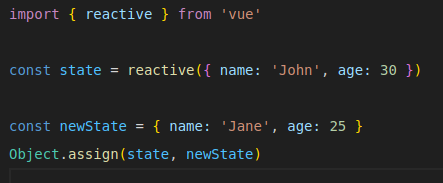
This keeps the original state object and simply updates its properties, preserving reactivity.
2. Using ref() with an object
If you’re using ref:
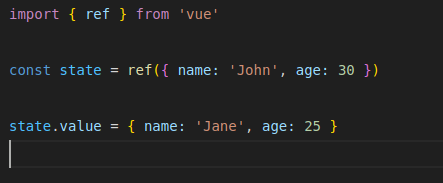
This works because ref() tracks .value, and assigning to .value triggers reactivity.
Don’t do this with reactive():

Rule of Thumb
- Use Object.assign() or direct mutation if you’re using reactive().
- Use .value replacement if you’re using ref().

Need Help With Vue Development?
Work with our skilled Vue developers to accelerate your project and boost its performance.
Hire Vuejs Developers